
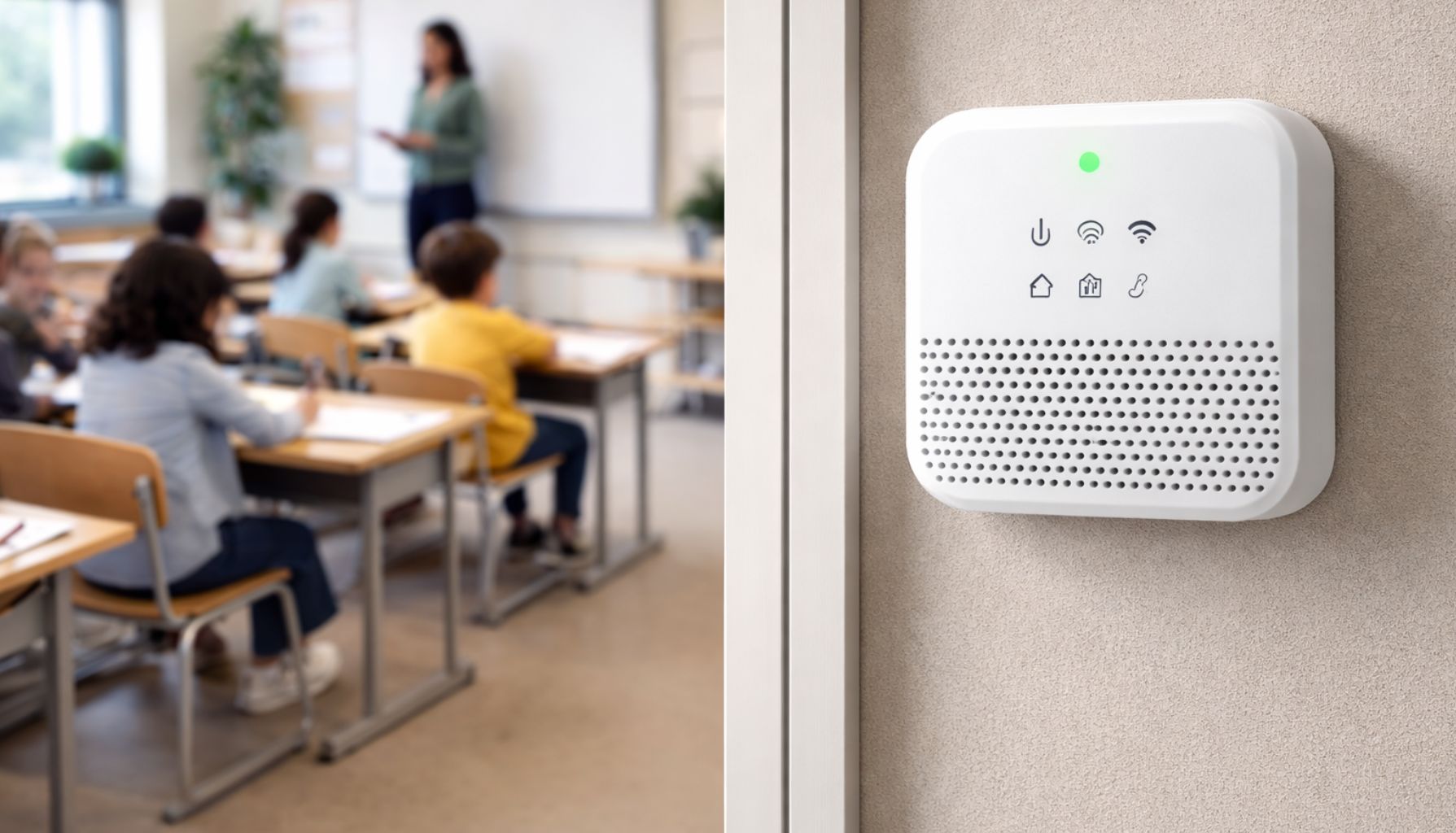
Schools and apartment communities face increasing challenges when it comes to indoor safety, health, and policy enforcement. Vaping, THC use, and cigarette smoking now occur in places where traditional supervision and legacy smoke detectors fail to provide visibility. As these behaviors rise, administrators and property managers need practical tools that help them act early, protect occupants, and reduce long-term risk.
Vape, THC, and cigarette smoke sensors give schools and multi-family properties a proactive way to address these issues. These sensors help teams detect prohibited activity in real time, improve indoor air quality, and support consistent enforcement without invading privacy. This guide explains how these sensors work, why they matter, and how experienced security partners can help deploy them effectively.
What Are Environmental Sensors?
Environmental sensors monitor indoor air for particles and chemical signatures released by electronic cigarettes, THC devices, and traditional cigarettes. Unlike fire smoke detectors, which activate during combustion events, vape sensors focus on identifying behavior that violates school policies or lease agreements.
These sensors continuously sample the air. When they detect elevated levels of vaping aerosols or smoke-related compounds, they send alerts to designated staff or property managers. This immediate visibility allows teams to respond quickly and appropriately instead of relying on complaints or delayed discovery.
How Vape, THC, and Cigarette Smoke Sensors Work
Modern environmental sensors rely on multiple sensing technologies to deliver accurate results and reduce false alerts.
Particulate sensors identify microscopic aerosol particles produced by vaping devices. These particles are much smaller than fire-related smoke particles, which explains why traditional smoke alarms often miss vaping activity.
Gas and chemical sensors detect compounds commonly associated with nicotine, THC, and cigarette combustion. These sensors help differentiate vaping and smoking from everyday environmental factors such as humidity, deodorants, or cleaning products.
Environmental sensors combine particulate data, chemical readings, humidity levels, and overall air-quality measurements. By analyzing several data points at once, these systems make smarter decisions and trigger alerts only when real incidents occur.
Types of Sensors Used in Schools and Apartments
Vape Detection
Vape detection focuses specifically on identifying e-cigarette vapor. Schools and property managers typically install them in bathrooms, locker rooms, stairwells, and other areas where people vape out of sight. These sensors give staff immediate insight into high-risk locations without requiring constant physical monitoring.
THC Detection
THC detection identifies compounds linked to cannabis vaping or smoking. As cannabis access expands, THC use has become a growing concern in both educational and residential settings. These sensors help organizations enforce policies consistently and provide reliable documentation when violations occur.
Cigarette Smoke Detction
Cigarette smoke creates combustion particles and odors that linger and travel through walls and HVAC systems. Cigarette smoke sensors help property managers enforce no-smoking policies, protect indoor air quality, and reduce long-term damage to units and shared spaces.
Environmental Sensors
Many facilities choose environmental sensors that detect vape aerosols, THC, cigarette smoke, and general air-quality issues in a single device. These solutions simplify installation, reduce hardware clutter, and provide broader coverage across schools and apartment communities.
Why Schools Need Vape, THC, and Smoke Detection
Schools across the country continue to struggle with vaping and THC use among students. Bathrooms, locker rooms, and hallways often become problem areas because staff cannot supervise them continuously.
Environmental sensors give administrators real-time awareness of these spaces. Instead of discovering issues after repeated incidents, staff can intervene early, address behavior promptly, and support prevention-focused programs. This approach shifts the focus from punishment to education and wellness.
From a health standpoint, secondhand exposure to vape aerosols and smoke may affect students, teachers, and staff. By monitoring air quality and reducing indoor exposure, schools support healthier learning environments and fewer disruptions.
Schools also carry a duty of care. Environmental sensors demonstrate proactive risk management and policy enforcement, which helps reduce liability and strengthen safety documentation.
Why Property Management Companies Use Environmental Sensors
Property managers face similar challenges, with additional concerns around asset protection and tenant satisfaction.
Many apartment communities enforce strict no-smoking and no-vaping policies. Without detection tools, managers often rely on resident complaints, which can escalate tensions and create disputes.
Environmental sensors allow property teams to identify issues early and respond consistently. They reduce secondhand smoke complaints, improve resident satisfaction, and help managers enforce lease terms fairly.
From a financial perspective, these sensors help prevent smoke-related damage to walls, flooring, and HVAC systems. They also reduce unit turnover costs and protect long-term property value. Many owners view Environmental sensors as a smart risk-management investment rather than an added expense.
Key Differences Between Vape, THC, and Cigarette Smoke Detection
Vape aerosols behave differently from cigarette smoke. They consist of fine particles that disperse quickly and often lack strong odors. THC vapor contains its own unique chemical markers. Cigarette smoke produces heavier particles and combustion byproducts that linger longer.
Because of these differences, facilities need purpose-built sensors or multi-sensor devices to detect each substance accurately. A single basic detector cannot reliably identify all forms of vaping and smoking.
Sensitivity settings also matter. Schools often prefer faster alerts to support early intervention, while apartment communities may prioritize accuracy to avoid unnecessary tenant disruptions. Adjustable thresholds help facilities tailor detection to their environment.
Where Environmental Sensors Are Typically Installed
In schools, teams usually install sensors in student bathrooms, locker rooms, hallways near restrooms, and areas with a history of vaping incidents. These placements target high-risk locations while avoiding private monitoring.
In apartment buildings, managers commonly place sensors in hallways, stairwells, elevators, laundry rooms, and shared amenities. Some properties also install sensors inside units, depending on local regulations and lease language.
Strategic placement ensures effective coverage while respecting legal and ethical boundaries.
Privacy and Ethical Considerations
Facilities must address privacy concerns when deploying detection technology. Modern environmental sensors do not use cameras. They do not identify individuals or record conversations. They simply analyze air quality and detect specific substances.
Transparency builds trust. Schools should communicate sensor use through policies, signage, and parent outreach. Property managers should clearly outline sensor deployment in lease agreements and community guidelines.
When facilities implement vape sensors responsibly, they enhance safety without compromising privacy.
Integration With Building and Security Systems
Environmental sensors deliver the most value when teams integrate them into a broader security and safety ecosystem. Integrated systems route alerts to dashboards, mobile devices, email, or SMS so staff can respond immediately.
Over time, analytics and reporting tools reveal patterns, identify problem areas, and support data-driven prevention strategies. This visibility helps schools and property managers move from reactive responses to proactive planning.
Choosing the Right Solution
When selecting a environmental sensor solution, facilities should evaluate detection accuracy, multi-substance capability, alerting options, scalability, and maintenance requirements. Just as important, they should choose a security partner who understands how to integrate these sensors into a comprehensive safety strategy.
Conclusion: From the Solucient Security Team
At Solucient Security, we view vape, THC, and cigarette smoke sensors as essential tools for modern safety, not standalone devices. When organizations integrate these sensors into a broader security and life-safety strategy, they create healthier environments and stronger operational control.
We work directly with schools and multi-family property managers to design solutions that balance prevention, privacy, and accountability. Our team focuses on proactive detection, seamless integration, and long-term reliability, so our clients can address vaping and smoking issues before they escalate.
At Solucient Security, we believe the right technology, implemented the right way, helps schools protect students and helps property managers protect residents and assets. If you are considering vape, THC, or smoke detection for your facility, our team is ready to help you evaluate your needs and build a solution that supports safety today and into the future.