
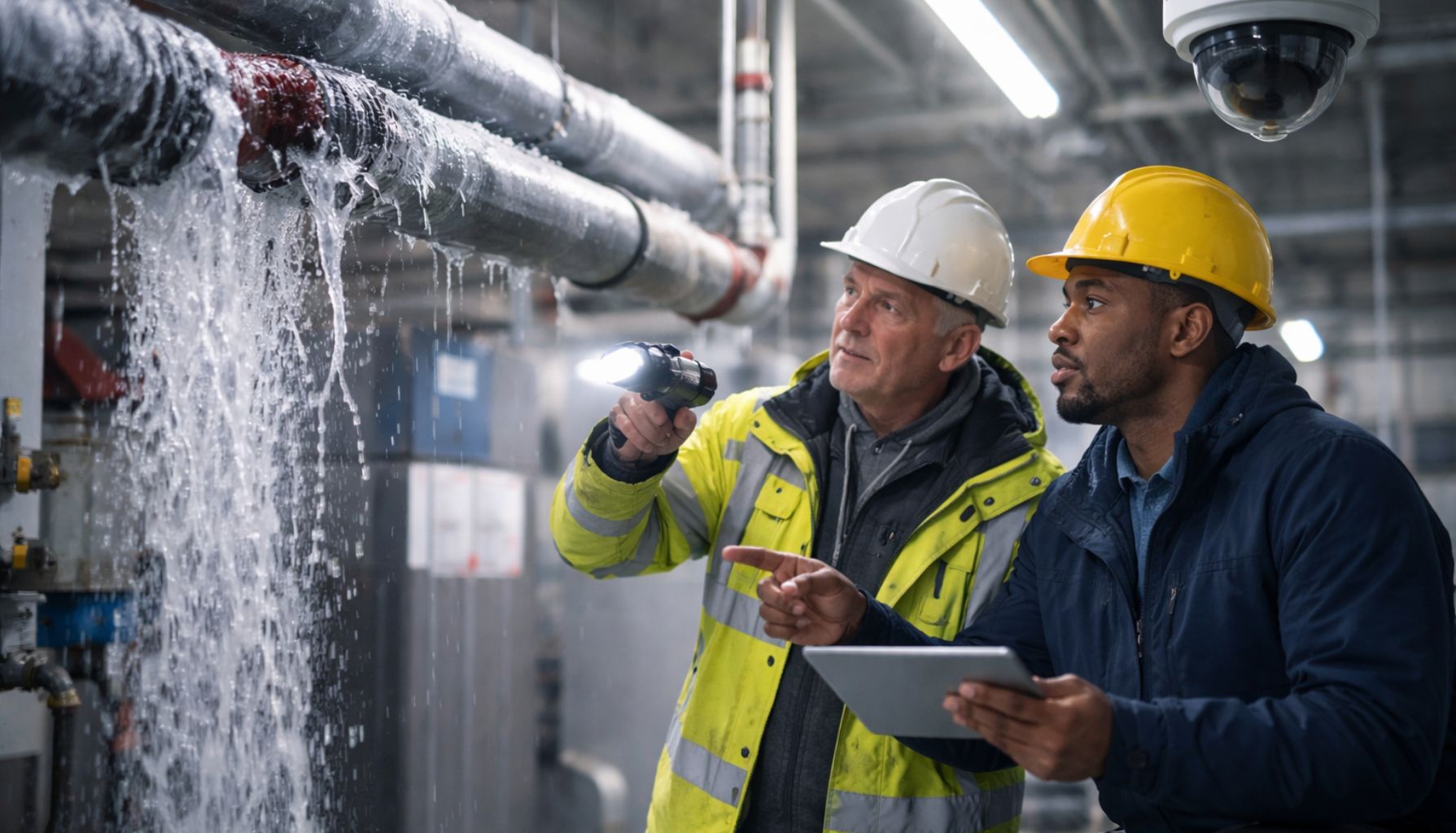
Freezing pipes, water leaks, and moisture-related damage create serious liability exposure in industrial and commercial facilities. These incidents often start quietly. A pipe freezes overnight. A slow leak forms in a mechanical room. Condensation builds in a low-traffic corridor. No one notices at first.
By the time someone discovers the problem, damage may already be extensive. Equipment may be affected. Inventory may be compromised. Floors may become slippery. Operations may stop. At that point, the focus quickly shifts from maintenance to liability.
Insurance carriers begin asking questions. Tenants want answers. Legal teams examine whether the facility exercised reasonable oversight. The central issue becomes timing and accountability. When did the problem begin? How long did it continue? What actions did staff take?
Facilities that cannot answer these questions with confidence face higher exposure. This is where video surveillance becomes a powerful liability tool. Cameras do not prevent pipes from freezing. However, they provide clear documentation of events and conditions. That documentation can significantly influence how claims and disputes unfold.
Understanding Liability in Industrial Facilities
Industrial environments involve shared responsibility. Property owners, facility managers, tenants, and service providers all play a role in maintaining safe conditions. When environmental failures occur, those responsibilities often come under scrutiny.
Liability does not automatically arise because damage occurred. Instead, liability often depends on whether the organization acted reasonably. Courts and insurers typically look for evidence that a facility monitored conditions and responded appropriately.
Environmental incidents create risk because they can:
- Damage structures, machinery, and stored goods
- Interrupt production or distribution
- Create hazardous walking surfaces
- Trigger contractual or regulatory concerns
When documentation is weak, disputes increase. Clear records reduce that uncertainty.
Freezing Pipes as a Major Liability Trigger
Frozen pipes remain one of the most common causes of industrial water damage, especially in colder climates or during seasonal temperature shifts.
Pipes typically freeze in areas such as:
- Mechanical and boiler rooms
- Utility corridors
- Exterior-facing walls
- Unoccupied sections of large facilities
These locations often receive limited daily traffic. If temperatures drop overnight or during a weekend, a pipe can freeze and burst before anyone notices. Water may flow for hours.
When that happens, insurers and legal teams focus on several critical questions:
- When did the pipe freeze?
- How long did water flow?
- Was the area monitored?
- How quickly did staff respond?
Without clear documentation, organizations must rely on estimates and assumptions. That uncertainty increases liability exposure.
Video surveillance helps facilities answer these questions with objective evidence. Recorded footage can show when visible water first appeared, how conditions developed, and when personnel intervened.
Water Leaks and Intrusion Events
Not all water-related liability stems from frozen pipes. Many incidents involve slow leaks or water intrusion that spreads over time.
Common causes in industrial settings include:
- Aging or deteriorating plumbing
- Roof leaks after storms
- Mechanical system failures
- Drainage backups
A small leak can become a major issue if it continues unnoticed. Water can spread across floors, damage electrical systems, or create slip hazards. In multi-tenant facilities, water may migrate into adjacent spaces and affect another party’s operations.
In these situations, timing becomes critical. The severity of damage often correlates with how long the leak remained active. If the affected party believes the facility delayed its response, disputes escalate.
Video surveillance provides valuable context. Cameras positioned in high-risk areas allow facilities to verify when visible leaks began and how the situation progressed. That clarity can significantly reduce disagreements about response time.
Moisture and Condensation as Hidden Risks
Moisture-related issues often develop slowly. Unlike a burst pipe, condensation may accumulate over weeks or months before visible damage appears.
This gradual process makes liability harder to defend. Mold complaints, corrosion, and material degradation often surface long after the initial environmental condition developed. At that stage, determining responsibility becomes challenging.
Moisture-related liability may involve:
- Mold claims from tenants or occupants
- Damage to sensitive machinery
- Corrosion of structural components
- Inventory deterioration
When a dispute arises, parties often question whether the facility should have detected the issue sooner. Without documentation, those conversations become subjective.
Video surveillance does not measure humidity levels. However, it can provide visual context regarding environmental conditions. Footage may show persistent condensation, water accumulation, or visible deterioration patterns over time. That visual history strengthens an organization’s ability to explain what occurred.
How Video Surveillance Strengthens Liability Protection
Video surveillance supports liability protection in several important ways.
First, it establishes clear timelines. Recorded footage can show when visible water first appeared, when staff entered the area, and how quickly mitigation began. Accurate timelines reduce speculation.
Second, it creates objective evidence. In liability disputes, conflicting accounts are common. Tenants, contractors, and staff may recall events differently. Video footage provides a shared factual reference.
Third, it supports internal accountability. Facilities can review footage to understand how incidents unfolded. This review process helps organizations improve procedures and reduce future risk.
Cameras add the most value when organizations place them intentionally in higher-risk locations, such as:
- Mechanical rooms
- Utility corridors
- Pipe runs near exterior walls
- Loading docks
- Low-visibility or rarely accessed areas
By aligning surveillance coverage with environmental risk zones, facilities strengthen both operational awareness and legal defensibility.
Pairing Video Surveillance with Water and Humidity Detection
Video surveillance provides visual documentation. However, facilities gain much stronger protection when they pair cameras with water detection and humidity monitoring systems.
Water detection sensors alert teams when standing or flowing water appears in critical areas such as mechanical rooms, beneath pipe runs, or near floor drains. Humidity sensors track environmental conditions and identify rising moisture levels that may lead to condensation, mold, or corrosion.
When these systems work together, they create two major advantages.
First, they accelerate detection. Instead of waiting for visible damage or relying solely on routine inspections, sensors trigger alerts as soon as abnormal conditions develop. Facility teams can respond immediately, often before water spreads or moisture causes secondary damage.
Second, they strengthen documentation. When a sensor activates at a specific time, surveillance footage can show exactly what conditions looked like at that moment. Teams can verify when water first appeared, when staff entered the area, and how quickly mitigation began. This combination of sensor data and video evidence creates a clear, defensible timeline.
In liability situations, this coordination makes a meaningful difference. Organizations can demonstrate that they actively monitored environmental conditions and responded promptly to alerts. Insurers and legal teams value objective records that show oversight and responsible action.
Environmental monitoring does not eliminate risk. However, when paired with professionally designed video surveillance, it improves early detection, speeds response, and provides stronger evidence if disputes arise.
Supporting Faster and More Informed Response
Video surveillance also enhances real-time decision-making.
When facility teams can view conditions remotely or review recent footage, they gain a clearer understanding of the situation before dispatching personnel. This visibility allows leaders to prioritize responses effectively and allocate resources appropriately.
In some cases, video footage helps confirm that a perceived issue is minor. In others, it shows that immediate action is necessary. Either way, access to visual information supports informed decision-making.
After an incident, organizations can use recorded footage to conduct structured reviews. These reviews identify response strengths and reveal areas for improvement. Over time, this process strengthens overall risk management.
Facilities with Elevated Environmental Risk
Certain industrial environments face greater exposure to freezing pipes and water-related incidents.
Manufacturing plants often operate complex plumbing and mechanical systems. Warehouses and distribution centers contain large unoccupied zones that may go unchecked overnight. Multi-tenant industrial buildings introduce additional complexity because multiple parties share space.
Facilities with limited off-hours staffing face heightened risk because environmental incidents often occur during nights, weekends, or holidays. In these situations, video surveillance becomes even more important for maintaining visibility.
Best Practices for Using Video Surveillance in Liability Management
Organizations that want to maximize the liability benefits of surveillance should:
- Place cameras in utility-heavy and water-prone areas
- Ensure coverage includes low-traffic spaces
- Retain footage long enough to support insurance and legal timelines
- Regularly review incidents to refine coverage strategies
Surveillance works best when facilities treat it as a risk management tool rather than only a security measure.
Final Thoughts from the Solucient Security Team
At Solucient Security, we understand that liability often hinges on clarity. In industrial environments, freezing pipes and water incidents may be unavoidable. What organizations can control is how well they document and manage those events.
We design and implement professional video surveillance systems that help facilities gain visibility into high-risk areas. When incidents occur, our clients have clear timelines, visual evidence, and reliable documentation. That documentation helps support insurance claims, defend against allegations of negligence, and demonstrate responsible facility management.
Liability protection is not only about preventing damage. It is about providing oversight. When questions arise, organizations need facts, not assumptions. Video surveillance provides that foundation.
If your facility faces environmental risk from freezing pipes or water-related incidents, the right surveillance strategy can strengthen both operational awareness and legal defensibility. At Solucient Security, we help organizations reduce uncertainty and protect what matters most.