
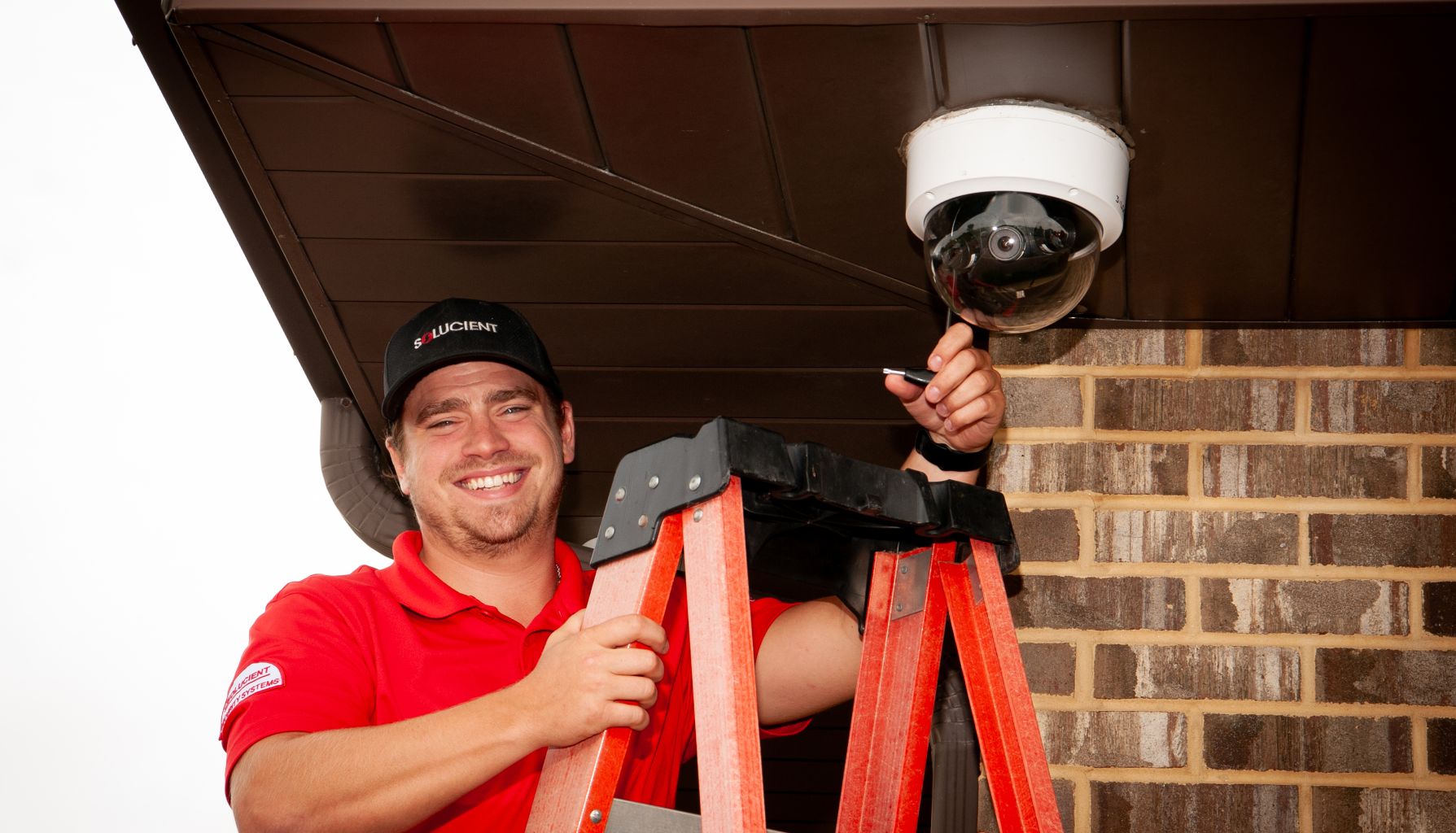
Quick Answer: How Can Retail Businesses Improve Holiday Security?
Retailers can improve holiday security by testing surveillance cameras and alarms, reviewing employee access permissions, securing inventory areas, and preparing staff to respond to incidents.
If your store needs new equipment or upgrades, consider starting your security review 6–8 weeks before peak shopping periods. This allows time to assess your property, plan improvements, and coordinate installation. Actual installation timelines depend on your existing infrastructure, property size, and system requirements.
The holiday shopping season brings more customers, larger inventory shipments, extended store hours, and seasonal employees. These changes create security challenges that retailers may not face as frequently during normal operations.
Crowded aisles make suspicious activity harder to identify. Frequent deliveries increase movement around stockrooms, while temporary employees may need access to restricted areas. Extended hours can also cause problems when alarm schedules don’t match store operations.
At Solucient Security, we help businesses assess their existing security systems and develop solutions that fit their facilities and operations.
Here are eight practical ways to prepare your retail business for the holiday rush.
Why Holiday Retail Security Deserves Attention
Retail security involves more than preventing individual shoplifting incidents. Businesses must also manage unauthorized access, inventory discrepancies, organized theft, and employee safety.
Retail theft remains a significant concern in Michigan. According to a February 2025 announcement from the Michigan Attorney General’s office, retailers in the state lost more than $2 billion in revenue to theft in 2022.
Michigan established a dedicated Organized Retail Crime Unit in January 2023 to investigate criminal organizations involved in stealing and reselling merchandise.
Although the reported losses reflect 2022 rather than holiday-specific incidents, they provide context for the security challenges Michigan retailers face.
Holiday operations introduce additional concerns:
- Higher customer traffic: Crowded entrances, aisles, and checkout counters make activity harder to monitor.
- Increased inventory movement: Frequent deliveries and stock transfers create more opportunities for merchandise discrepancies.
- Seasonal staffing: Temporary employees need appropriate access permissions and security training.
- Extended operating hours: Changes to store schedules affect alarms, access control, and closing procedures.
- Customer pickup operations: Curbside pickup and online orders require clear merchandise verification procedures.
Retailers should account for these changes when reviewing their existing security systems.
8 Holiday Security Tips for Retail Businesses
1. Test Your Security Equipment Before the Holiday Rush
Start by checking whether your existing security equipment works properly.
A camera may display live footage but fail to save recordings. An alarm sensor may stop responding, or a former employee may still have active access credentials.
Inspect the following:
- Surveillance cameras and recording equipment
- Intrusion Detection alarm functionality
- Access Control card readers and electronic locks
- Alarm communication paths
- Backup power and network equipment
Don’t rely on status indicators alone. Review recorded footage to confirm that cameras capture usable images, and check access permissions against current employee responsibilities.
For intrusion alarms, Solucient Security recommends testing the system at least once a month. Contact our Central Station before testing so operators can place your system in test mode and help prevent unnecessary dispatches.
For additional guidance, review our Central Station Monitoring Quick Guide.
2. Review Surveillance Coverage Around High-Risk Areas
Video surveillance helps retailers monitor activity and review incidents. However, cameras must cover the right locations.
Holiday decorations, merchandise displays, and additional inventory can obstruct existing camera views.
Check surveillance coverage around:
- Entrances and exits: Monitor activity near customer access points.
- Checkout counters: Record activity around registers and payment areas.
- High-value merchandise: Maintain visibility around products that require additional protection.
- Stockrooms: Monitor inventory storage and employee-only areas.
- Receiving entrances: Record deliveries and merchandise movement.
- Parking and pickup areas: Check visibility around exterior entrances and pickup locations.
Also review lighting, camera angles, recording quality, and storage capacity.
For example, a camera that normally covers an entire aisle may lose visibility when employees install a tall holiday display.
At Solucient Security, we design video surveillance systems around property layouts and security requirements. We also provide 24/7 system health monitoring to help identify equipment problems.
3. Review Access Permissions for Seasonal Employees
Holiday staffing creates additional access management responsibilities.
Temporary employees may need access to sales floors and breakrooms, but they shouldn’t automatically receive permission to enter offices, stockrooms, or other restricted areas.
Before seasonal hiring increases:
- Remove credentials and codes assigned to former employees.
- Give temporary employees individual credentials.
- Limit access based on job responsibilities.
- Set permissions according to approved work schedules.
- Review vendor and contractor access.
- Deactivate temporary credentials when assignments end.
For example, a seasonal cashier may need access to the break room but not the stockroom.
Our access control systems help businesses manage credentials, control entry to restricted areas, and review access activity.
4. Prepare Employees for Organized Theft and Security Incidents
Some retail theft incidents involve coordinated activity rather than a single individual.
These situations can develop quickly, particularly in crowded stores. Employees need clear instructions for reporting suspicious activity without putting themselves or customers at risk.
Before the holidays:
- Explain how employees should report suspicious behavior.
- Identify who should contact management or emergency services.
- Review surveillance coverage around entrances and high-value merchandise.
- Establish procedures for responding to threatening behavior.
- Train employees to preserve relevant incident details and footage.
Focus training on observable behavior rather than personal appearance.
Employees should follow company procedures and avoid physically confronting suspected shoplifters.
The Cybersecurity and Infrastructure Security Agency (CISA) recommends that shopping venues train employees to recognize and report suspicious activity, secure non-public entrances, and maintain emergency response plans.
A short security orientation before the holiday rush can help permanent and seasonal employees understand these responsibilities.
5. Secure Deliveries, Inventory, and Customer Pickup Orders
Holiday inventory moves through several areas before reaching customers.
Employees receive shipments, transfer merchandise into storage, replenish shelves, and prepare online orders for pickup.
Each step requires clear procedures to reduce inventory discrepancies and unauthorized access.
Retailers should:
- Restrict stockroom access to authorized employees.
- Secure receiving entrances between deliveries.
- Check incoming shipments against delivery records.
- Monitor loading and inventory storage areas.
- Designate secure locations for customer pickup orders.
- Verify pickup information before releasing merchandise.
For curbside pickup or ship-from-store operations, avoid leaving packed orders unattended near public entrances.
Businesses handling high-value merchandise should also review surveillance coverage around receiving areas and order preparation stations.
6. Review Cash Handling and Closing Procedures
Holiday sales can increase cash transactions and checkout activity.
Retailers should review how employees handle cash, secure registers, and complete closing procedures.
Important practices include:
- Limit access to cash-handling areas.
- Follow established cash-counting and reconciliation procedures.
- Avoid leaving cash unattended at registers.
- Keep cash storage areas restricted.
- Follow company procedures when preparing deposits.
- Review surveillance coverage around checkout areas.
Employees should avoid sharing deposit schedules and cash-handling procedures with unauthorized individuals.
For stores with extended hours, managers should confirm who handles end-of-day reconciliation and who secures the property after closing.
7. Update Alarm Schedules and Monitoring Contacts
Retail operating hours often change during the holiday season.
Stores may open earlier, close later, or schedule additional cleaning and inventory shifts. These changes can affect alarm settings and employee access.
For example, a store that normally closes at 8 p.m. may remain open until 11 p.m. during the holiday rush. If its alarm follows the original schedule, employees could accidentally trigger it.
Before extending operating hours:
- Update alarm arming and disarming schedules.
- Review employee access times.
- Confirm opening and closing responsibilities.
- Coordinate access for cleaning crews and vendors.
- Update emergency contact call-list information.
- Review security procedures for holiday closures.
If your primary emergency contact plans to take vacation, designate another authorized person.
At Solucient Security, our in-house Central Station monitors alarm signals 24/7/365. Our operators follow established response procedures based on the alarm type and account instructions.
Learn more about what happens when your alarm goes off.
8. Keep Emergency Exits and Safety Equipment Accessible
Holiday displays can change how customers move through a store.
Additional merchandise, decorations, and promotional fixtures may obstruct emergency exits, block safety equipment, or narrow walking paths.
Before major shopping events:
- Keep emergency exits and evacuation routes clear.
- Avoid placing merchandise in front of fire safety equipment.
- Check that employees know primary and alternate exits.
- Review occupancy limits and crowd management procedures.
- Inspect decorations for electrical and fire hazards.
- Confirm that employees understand evacuation procedures.
Never block emergency routes to accommodate additional inventory or displays.
Solucient Security also provides fire and life safety systems that support fire detection and emergency notification.
Businesses should review these systems alongside their general security equipment before the holiday rush.
How Far in Advance Should Retailers Plan Security Installation?
Consider starting your security review 6–8 weeks before your busiest holiday shopping period.
Actual installation timelines vary by project, but this planning window gives you time to assess your property, identify equipment needs, and coordinate installation.
At Solucient Security, we evaluate three main factors before discussing an installation schedule.
Your Existing Security Infrastructure
If your store already has surveillance cameras, access control, or intrusion alarms, you may only need equipment upgrades or additional coverage.
For example, you might want to add cameras near a new checkout area or improve surveillance around a receiving entrance.
We assess your existing system to determine whether it can support those additions.
Older equipment may require upgrades because of compatibility, capacity, or network limitations.
A store without existing security infrastructure may need new cabling, equipment installation, configuration, and testing.
Your Property’s Size and Layout
A small storefront and a large department store have different security requirements.
A smaller property may need surveillance around its entrance, checkout counter, and stockroom.
Larger properties may require cameras across several floors, multiple access-controlled entrances, loading areas, and parking facilities.
The number of devices, installation locations, and infrastructure requirements affect the project’s scope.
Retailers with multiple locations may also need coordinated installation schedules.
Your Security System Requirements
Some businesses only need additional cameras or alarm sensors. Others require customized systems that integrate surveillance, access control, and intrusion detection.
These projects involve different levels of planning, configuration, and testing.
Our team reviews your property, identifies security priorities, and evaluates the equipment needed to meet your requirements.
This assessment helps us establish a realistic project scope and discuss installation scheduling.
Should You Upgrade Your Existing Security System or Replace It?
You may not need to replace your entire security system to improve holiday protection.
If your existing equipment works reliably and supports your current needs, targeted upgrades may provide additional coverage.
For example, adding cameras near a new merchandise area may address a surveillance gap without replacing every camera.
Consider replacement if:
- Equipment frequently malfunctions.
- Cameras cannot capture usable footage.
- Important areas lack adequate coverage.
- Existing systems cannot support required integrations.
- Your security needs have outgrown the current equipment.
Before making a decision, ask your security provider:
- Can we reuse our existing equipment?
- What limitations affect future expansion?
- Can the new equipment integrate with our current system?
- How will installation affect daily operations?
- What maintenance and monitoring options are available?
At Solucient Security, we evaluate existing infrastructure before recommending system improvements.
How Solucient Security Helps Retail Businesses Prepare
Retail security requirements vary by property size, operating hours, inventory, and staffing.
At Solucient Security, we design and integrate commercial security systems around these requirements.
Our services include:
- Video Surveillance: Camera systems designed around property layouts, supported by 24/7 system health monitoring.
- Access Control: Systems that manage employee credentials, entry schedules, and restricted areas.
- Intrusion Detection: Equipment that detects potential unauthorized entry into protected spaces.
- 24/7 Central Station monitoring: Our in-house team monitors alarm signals and follows established response procedures.
- Fire and Life Safety: Systems that support fire detection, emergency notification, and building safety requirements.
- Security System Integration: We connect compatible security technologies to support daily security operations.
We also provide ongoing customer support through dedicated Client Relationship Specialists.
Whether you operate a single retail store or manage multiple properties, our team can evaluate your current security setup and discuss improvements that fit your operations.
Frequently Asked Questions
How early should retailers plan holiday security installation?
Consider starting your security review 6–8 weeks before peak holiday shopping periods. This provides time to evaluate your property, discuss equipment requirements, and coordinate installation. Actual installation time depends on existing infrastructure, property size, and project complexity.
How often should retailers test their security alarms?
Solucient Security recommends testing alarm systems at least once a month. Contact your monitoring provider before testing so the system can enter test mode when necessary.
Can retailers upgrade existing security equipment?
Yes. Businesses can often add cameras, improve access control, or expand intrusion detection without replacing every component. Equipment compatibility and system condition determine which upgrades make sense.
Does Solucient Security offer 24/7 monitoring?
Yes. Our in-house Central Station monitors alarm signals 24/7/365. We also provide 24/7 system health monitoring for our video surveillance systems.
Prepare Your Retail Business Before the Holiday Rush
Security improvements take planning, particularly when your business needs equipment upgrades or a customized installation.
Starting your review 6–8 weeks before peak shopping periods gives you more flexibility to evaluate options and coordinate work around store operations.
At Solucient Security, we can help you assess your existing setup and determine which improvements fit your property.
Schedule a Complimentary 15-Minute Discovery Call
Tell us about your business, existing security equipment, and operational concerns.
We’ll discuss your needs and determine whether there’s a good fit to move forward. If there is, we’ll connect you with a dedicated Client Relationship Specialist to continue the discovery process.