
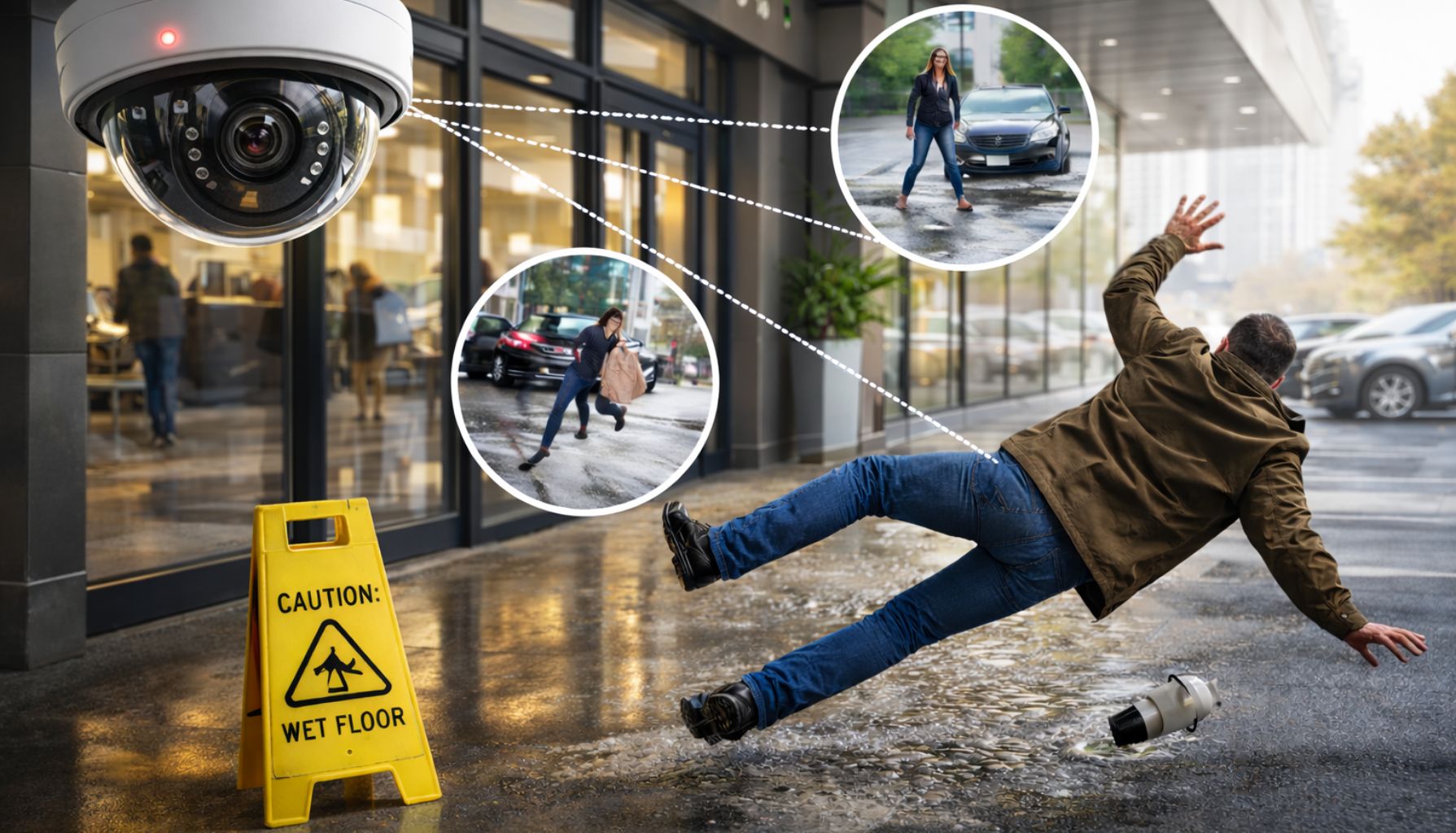
Slip and fall incidents remain one of the most common causes of liability claims for commercial properties. What often starts as a routine visit to a business can quickly turn into an injury, an insurance claim, or even legal action. In our work with property owners and facility managers, we consistently see how uncertainty after an incident creates the biggest risk.
At Solucient Security, we help businesses reduce that uncertainty. We design and implement video surveillance systems that support safety, accountability, and clear documentation. Parking lots, entryways, and sidewalks may appear ordinary, but they generate a disproportionate share of slip and fall claims. When businesses monitor these areas properly, they significantly reduce liability exposure.
This article explains why these incidents occur so often, how liability develops, and how video surveillance helps businesses protect both people and operations.
Understanding Slip and Fall Liability in Commercial Properties
A slip and fall incident occurs when someone loses footing due to unsafe walking conditions. In commercial settings, these incidents usually involve customers, visitors, vendors, or employees moving through shared areas.
Property owners and operators have a legal duty to maintain reasonably safe conditions. Courts and insurance providers do not expect perfection, but they do expect diligence. When an injury occurs, investigators focus on whether the business identified hazards, responded appropriately, and took reasonable steps to reduce risk.
Without documentation, businesses struggle to demonstrate those efforts. Claims often rely on personal statements rather than facts, which increases the likelihood of disputes, delays, and unnecessary settlements. Clear evidence changes that dynamic entirely.
Why Parking Lots, Entryways, and Sidewalks Carry the Highest Risk
Certain areas consistently produce slip and fall claims because they combine heavy foot traffic with changing conditions.
Parking Lots
Parking lots expose pedestrians to weather, vehicles, and uneven surfaces. Rainwater, oil residue, worn pavement, snow, and ice all contribute to hazardous conditions. Poor lighting further increases risk by limiting visibility, especially during early morning or evening hours.
Businesses often underestimate parking lot risk because incidents occur outside the building. From a liability standpoint, however, parking areas remain part of the property’s responsibility.
Entryways
Entryways act as transition zones between outdoor and indoor environments. During rain or snow, people track moisture inside, creating slippery floors. Mats shift, curl, or wear down over time. High foot traffic compounds these risks, particularly during peak hours.
Because many incidents happen within seconds of entry, documentation in these areas becomes critical.
Sidewalks and Walkways
Sidewalks and walkways see constant use and gradual wear. Cracked concrete, uneven joints, drainage problems, and temperature changes all create trip hazards. Businesses often overlook these areas until an incident occurs.
When claims arise, the condition of these walkways becomes a central issue.
How Video Surveillance Reduces Slip and Fall Liability
Businesses often associate cameras with crime prevention, but surveillance plays an equally important role in liability protection.
Capturing Clear Evidence of What Happened
Video footage provides an objective account of an incident. Cameras record the exact moment someone falls, the condition of the walking surface, and the surrounding environment. Footage shows lighting conditions, signage placement, floor mats, and staff response.
Instead of relying on assumptions or conflicting statements, businesses can review real footage. That clarity often determines whether a claim resolves quickly or escalates.
Supporting Faster and More Accurate Claims Resolution
Insurance providers and legal teams rely on evidence. When businesses provide clear video footage, claims move forward more efficiently. Legitimate claims resolve faster, while inaccurate or exaggerated claims lose traction early in the process.
This reduces both financial exposure and the administrative burden on staff.
Identifying Risks Before Injuries Occur
Surveillance systems also support proactive safety efforts. When businesses review footage regularly, they often identify recurring issues. Water may pool near a specific entrance after storms, or people may stumble over the same sidewalk section repeatedly.
By spotting these patterns early, businesses can correct problems before someone gets hurt. This approach shifts surveillance from a reactive tool to a preventive one.
Encouraging Safer Behaviour Across the Property
Visible cameras influence behaviour. Visitors move more cautiously, and employees follow safety procedures more consistently when they know the area is monitored. Cameras also encourage faster reporting of hazards, which helps businesses address issues before incidents occur.
Strategic Camera Placement in High-Risk Areas
Effective liability protection depends on thoughtful camera placement, not just camera quantity.
Parking Lots
Cameras should clearly capture pedestrian paths, building approaches, curb ramps, and crosswalks. Coverage should follow how people actually move from their vehicles to the building. Proper lighting and camera angles ensure visibility during all hours of operation.
Entryways
Entryway cameras should capture both exterior approaches and interior floor areas just inside the door. This coverage documents weather conditions, mat placement, and foot traffic patterns that often contribute to slips.
Sidewalks and Walkways
Sidewalk cameras should provide continuous coverage with minimal blind spots. Areas with elevation changes, cracks, or drainage issues require particular attention. Consistent visibility during low-light hours matters just as much as daytime clarity.
At Solucient Security, we design camera layouts around real-world movement, not generic diagrams.
Camera Features That Matter for Liability Protection
Certain system features make a meaningful difference when incidents occur.
High-resolution cameras capture surface conditions clearly. Strong low-light performance supports exterior areas like parking lots and walkways. Wide dynamic range maintains clarity in entryways where glare and shadows change throughout the day.
Reliable video storage and fast retrieval also matter. Businesses need access to footage when insurance providers or attorneys request it. Ongoing system health monitoring ensures cameras function properly when incidents happen.
Making Surveillance Part of a Proactive Safety Strategy
Video surveillance delivers the greatest value when businesses use it as part of a broader risk management strategy. Regularly reviewing footage, adjusting coverage, and responding to observed risks reduces incident frequency over time.
We often recommend starting with a security and risk assessment. These assessments identify high-traffic areas, lighting gaps, and coverage limitations that increase liability exposure. Addressing these issues early costs far less than responding to claims later.
Strengthening Protection Through System Integration
While cameras play a central role, integration strengthens their impact. Access control systems provide context around who entered or exited an area. Intrusion detection supports review of after-hours incidents. Monitoring services ensure systems remain operational and alert teams to issues quickly.
Integrated systems give businesses a clearer, more complete picture during investigations.
Real-World Situations We See Regularly
In many cases, video footage resolves claims that would otherwise become prolonged disputes. Footage may confirm that warning signs were present, mats were properly placed, or surfaces were clear at the time of the incident. In other cases, footage highlights recurring hazards that businesses can now fix.
Either outcome improves safety and reduces future risk.
Final Thoughts
Slip and fall incidents represent one of the most preventable forms of liability, yet they continue to cost businesses time and money. Parking lots, entryways, and sidewalks deserve the same level of attention as interior spaces when it comes to documentation and safety planning.
From our perspective at Solucient Security, professionally designed video surveillance reduces uncertainty, protects people, and gives businesses the clarity they need when incidents occur. If you want to understand your current exposure better or improve coverage in high-risk areas, our team is always ready to help assess your property and design a solution that aligns with your operations and liability concerns.