
Quick Answer
An access control vestibule, sometimes called a security vestibule or mantrap, is a small enclosed space located at the entrance of a building. It is designed with two interlocking doors, one leading into the entry way from outside and the other leading from the vestibule into the secure area of the facility.
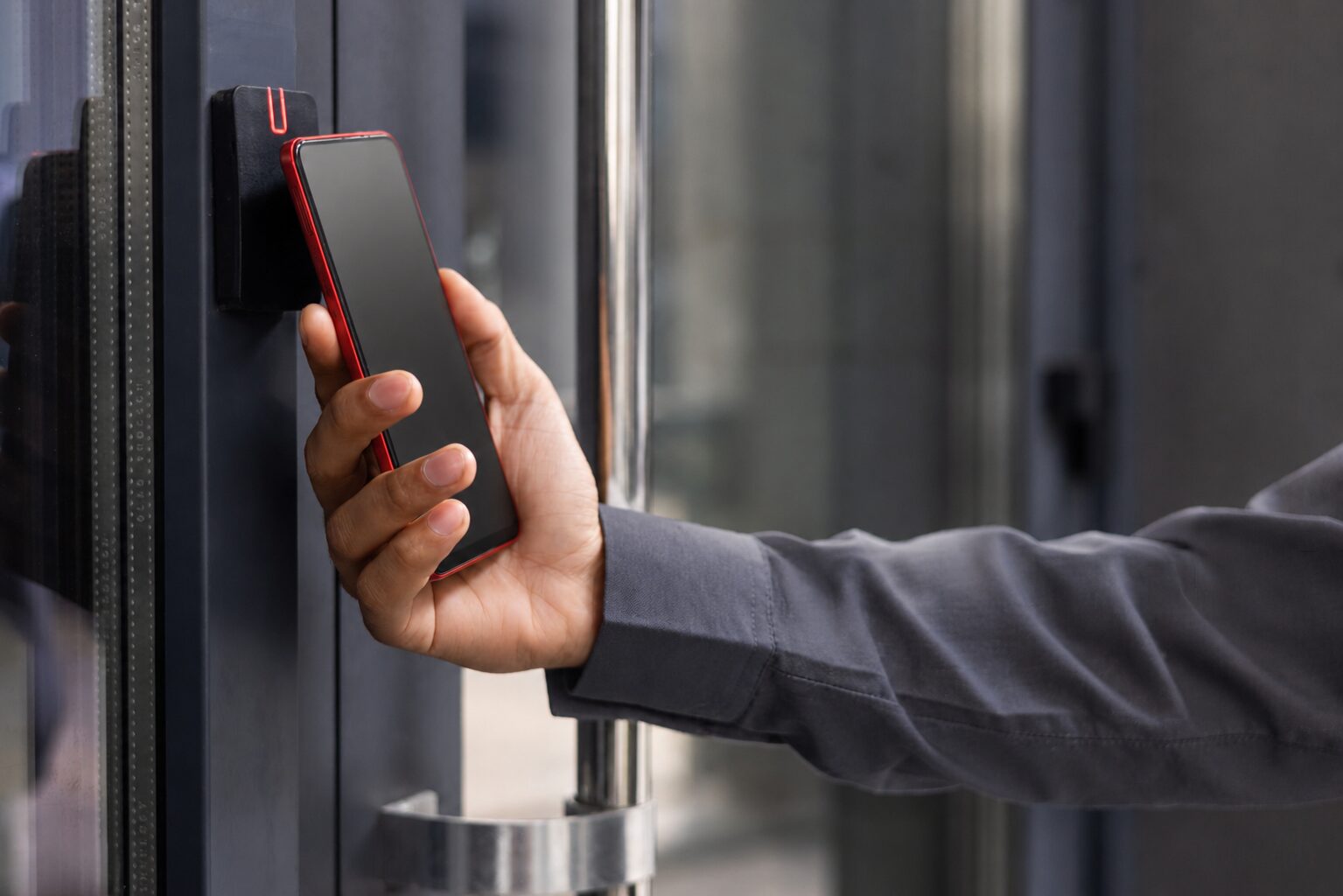
This enhances security because both doors can never be open at the same time. The first door must close and lock before the second one can unlock. What’s even more effective is when facilities require entrants to verify their identity a second time. Once from outside of the building, and then again from within the vestibule stall after the first door unlocks. While ID cards used to be the most common way to identify users, many businesses now use biometrics, facial recognition, phone NFC, unique PIN codes and/or access granted by an administrator.
Oftentimes, businesses use a combination of verification methods. Traditional methods, like keycards, ID badges, or security guards are useful, but they aren’t always enough.
Between “tailgating”, “piggybacking”, stolen credentials and general unawareness of security by employees, intruders are still able to gain access to buildings they shouldn’t.
That is why many organizations now rely on access control vestibules and more than one method of identity verification.
- What Are the Benefits of an Access Control Vestibule?
- What Are the Key Features of an Access Control Vestibule?
- Fully Customizable Access Control systems For Michigan Business
- Access Control Vestibules vs. Other Entry Security Measures: An Honest Look At the Pros & Cons
- What Types of Businesses Need Access Control Vestibules in Michigan?
- What Type of Access Control System Should I Get For My Business In Michigan?
- Frequently Asked Questions

How Do Access Control Vestibules Work?

Door 1: Entry Request
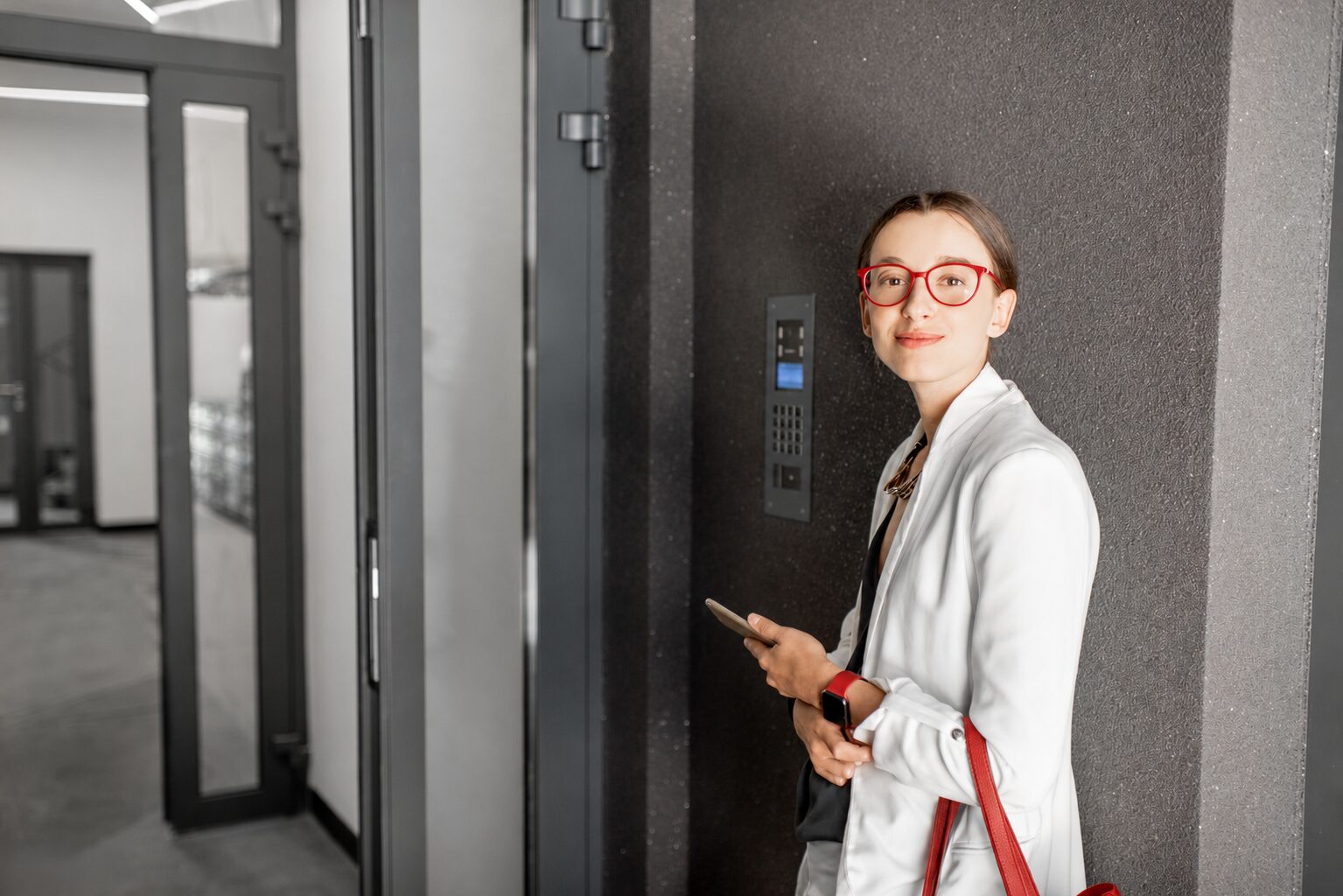
Biometric scan, badge, card or phone is used to unlock the first door

First Door Unlocks
The first door unlocks. The second door remains locked until verified.

Door 2: Entry Request
2nd verification – may be a re-scan of the same ID presented at door 1 or different

Second Door Unlocks
Follow-up alerts provide changes, all-clear notices or reunification details
Access Control Vestibule vs. Regular Entry: What’s the Difference?
Unlike a simple lobby or reception area, an access control vestibule creates a buffer zone. It eliminates common entry risks such as:
Tailgating
when someone slips in behind an authorized person without proper credentials.
Piggybacking
when an authorized person knowingly allows someone else to enter using their access rights. By preventing these scenarios, vestibules add a critical layer of protection to entry points.
Built-In Safety Features
Vestibules also come with fail-safe and fail-secure mechanisms. These ensure that during emergencies like fire alarms or power failures, doors can automatically unlock for safe evacuation while still maintaining high levels of protection during normal operations.
What Are the Benefits of an Access Control Vestibule?
Stronger Security
By forcing individuals to verify their identity before passing through, vestibules dramatically lower the chances of unauthorized access.
Controlled Flow of People
Only one person can pass through at a time, ensuring entry logs are accurate and preventing overcrowding at secure checkpoints.
Visible Deterrence
The presence of an access control vestibule discourages intruders who recognize the system’s difficulty to bypass.
Seamless Integration
Vestibules are designed to work alongside existing access control systems, alarms, and surveillance networks, offering a unified approach to security.
Regulatory Compliance
Certain industries require strict access monitoring for compliance purposes. Vestibules help organizations meet standards such as:
HIPAAA [healthcare]PCI DSS & GLBA [financial services]SP 800-53 PE3 [high security government buildings]ISO/IEC 27001:2022 [information security management systems]K-12 Safety [schools; varies by city, state & county]
What Are the Key Features of an Access Control Vestibule?
Anti-Tailgating Technology
Within an access control vestibule, sensors monitor how many people enter and detect when an additional person attempts to follow an authorized user. If tailgating is detected, the interior door can remain locked while the system alerts security personnel. This helps prevent unauthorized entry without requiring a guard at every controlled doorway.
Dual-interlocking Doors
Dual interlocking doors strengthen access control by requiring the exterior door to close and secure before the interior door can open. This creates a controlled verification point and prevents both doors from standing open simultaneously. When paired with occupancy sensors, the vestibule can restrict passage to one authorized person at a time.

Credentials and ID Verification
An access control system can require users to present an ID card, scan a badge, enter a PIN or provide a biometric credential before proceeding. Combining multiple verification methods makes a stolen card or shared code less likely to provide unauthorized entry. Access permissions can also be limited according to an employee’s role, location or work schedule.
Access Control and Security Integrations
Access control vestibules can integrate with video surveillance, intercoms, visitor-management systems and intrusion alarms. When access is denied or suspicious activity occurs, the system can notify security personnel and associate the event with recorded video. These integrations provide faster verification, stronger documentation and a more coordinated response.
Fully Customizable Access Control systems For Michigan Business
Every facility has different entrances, operating hours, employee roles and security risks. Access control vestibules can be customized with multiple authentication methods and integrated security technologies, allowing Michigan businesses to manage entry, monitor activity and respond to potential threats through one coordinated access control system.
Card Readers and Key Fobs
These are the type of access control system people are the most well-known type of access control . The access control system checks each credential against the user’s assigned permissions before unlocking the interior door. Access can be limited according to the employee’s role, location or work schedule, and every entry attempt is recorded.
What Are Some Authentication Methods & Integrations For Access Control Systems?
Are There Any Benefits to Access Control Systems Specific to Michigan?
Yes! For certain types of weather, a vestibule may have air flow features that prevent a room with controlled temperatures from leaking out of the rest of the building.
You have probably noticed grocery stores where the shopping carts are kept. This is a very large vestibule, but they serve many purposes. During a typical snowy winter day in Michigan, for example, floors might be slippery. Management might keep one side open at a time to make it easier to keep floors dry. They might lock one side towards closing time to consolidate foot traffic.
Access Control Vestibules vs. Other Entry Security Measures: An Honest Look At the Pros & Cons
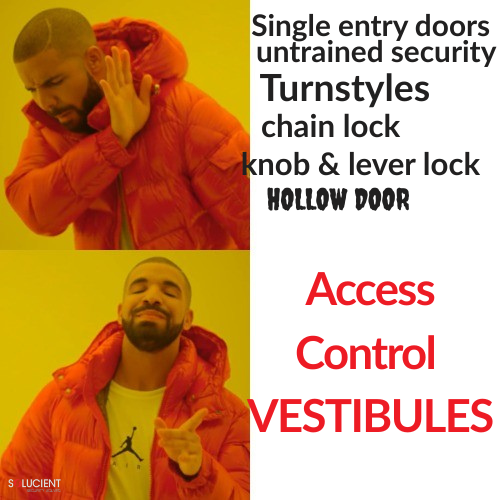
Turnstiles, single-entry doors, security guards and access control vestibules provide different levels of protection. The right solution depends on the facility’s security risks, available space, daily traffic and need for identity verification.
For facilities requiring stronger entry protection, an access control vestibule provides a controlled checkpoint that other standalone measures cannot. Its effectiveness can be strengthened further by integrating camera surveillance and intrusion detection systems into the broader access control system.
Turnstyles vs
Access Control Vestibules
Pros
- Process employees quickly during busy shift changes.
- Integrate with badges and access control credentials.
- Discourage casual unauthorized entry.
Cons
- Some designs can be jumped, crawled under or used for piggybacking.
- May create accessibility challenges or require a separate ADA-compliant entrance.
- Provide less protection than a fully enclosed security vestibule.
Single-Entry Doors vs Access Control Vestibules
Pros
- Cost less to install than a complete access control vestibule.
- Work well for lower-risk employee entrances.
- Allow faster and more convenient entry.
Cons
- Stolen, shared or cloned credentials may provide unauthorized access.
- Authorized users can hold the door open for others.
- Provide no controlled area for secondary identity verification.
Security Guards vs Access Control Vestibules
Pros
- Apply human judgment to visitors and suspicious behavior.
- Assist with identification, directions and emergency response.
- Provide a visible security presence that can deter unwanted activity.
Cons
- Require ongoing staffing, training and labor expenses. In other words: COSTLY!
- Cannot physically prevent unauthorized entry without supporting barriers and technology.
Challenges and Considerations
While vestibules are highly effective, they are not without challenges:
- Cost – Installation and integration are more expensive than traditional doors.
- Space Requirements – Not all buildings have adequate room for a vestibule system.
- User Experience – If poorly designed, vestibules may slow down traffic flow and frustrate employees.
- Maintenance – Regular updates and checks are necessary to ensure long-term reliability.
What Types of Businesses Need Access Control Vestibules in Michigan?

Nightclubs

Airports

Government

Manufacturers

Schools
What Type of Access Control System Should I Get For My Business In Michigan?
- Automotive manufacturing: Badge access for plants, engineering, parts storage and loading areas.
- Hospitals and medical campuses: Role-based access for pharmacies, labs, patient units and staff areas.
- Advanced manufacturing: Layered access for R&D, production, machinery and server rooms.
- Precision manufacturing: Credentialed access for machine shops, tool storage and quality-control areas.
- Distribution centers: Gate and badge access for yards, docks, inventory and employee entrances.
- Pharmaceutical and biotech: Auditable access for laboratories, cleanrooms, materials and research data.
- Transportation Gate and badge access for fleet yards, dispatch, maintenance, fuel and cargo areas.

Michigan At a Glance: Access Control Vestibules & Nearby Northern Midwest Markets
Where Are Access Control Vestibules Useful In Michigan & Nearby Northern Midwest Markets?
Undoubtedly, access control and vestibules are especially useful in facilities that need to separate public or visitor entry from employee-only, production, clinical, research, financial, or infrastructure areas. Furthermore, they assist in keeping vulnerable people safe such as the elderly in residential homes or children in schools. Speaking of schools – access control vestibules in Michigan’s schools are highly encouraged by education officials. As a matter of fact, the state has a competitive grant program that incentivizes school safety in an effort to keep its smallest, most vulnerable people guarded from danger.
You have most likely seen access control vestibules at airports, event venues & attractions, government buildings, hospitals or residential care facilities. In fact, you’ve probably walked right through them without noticing. And sometimes, you might even enter through the vestibule due to employee negligence!
Without a doubt, a single security breach just by letting the wrong person in can devastate the masses at a moment’s notice. That is why in many industries, preventing unauthorized access through its building’s entry points with advanced technologies is the first step to protecting its digital data, people and property.
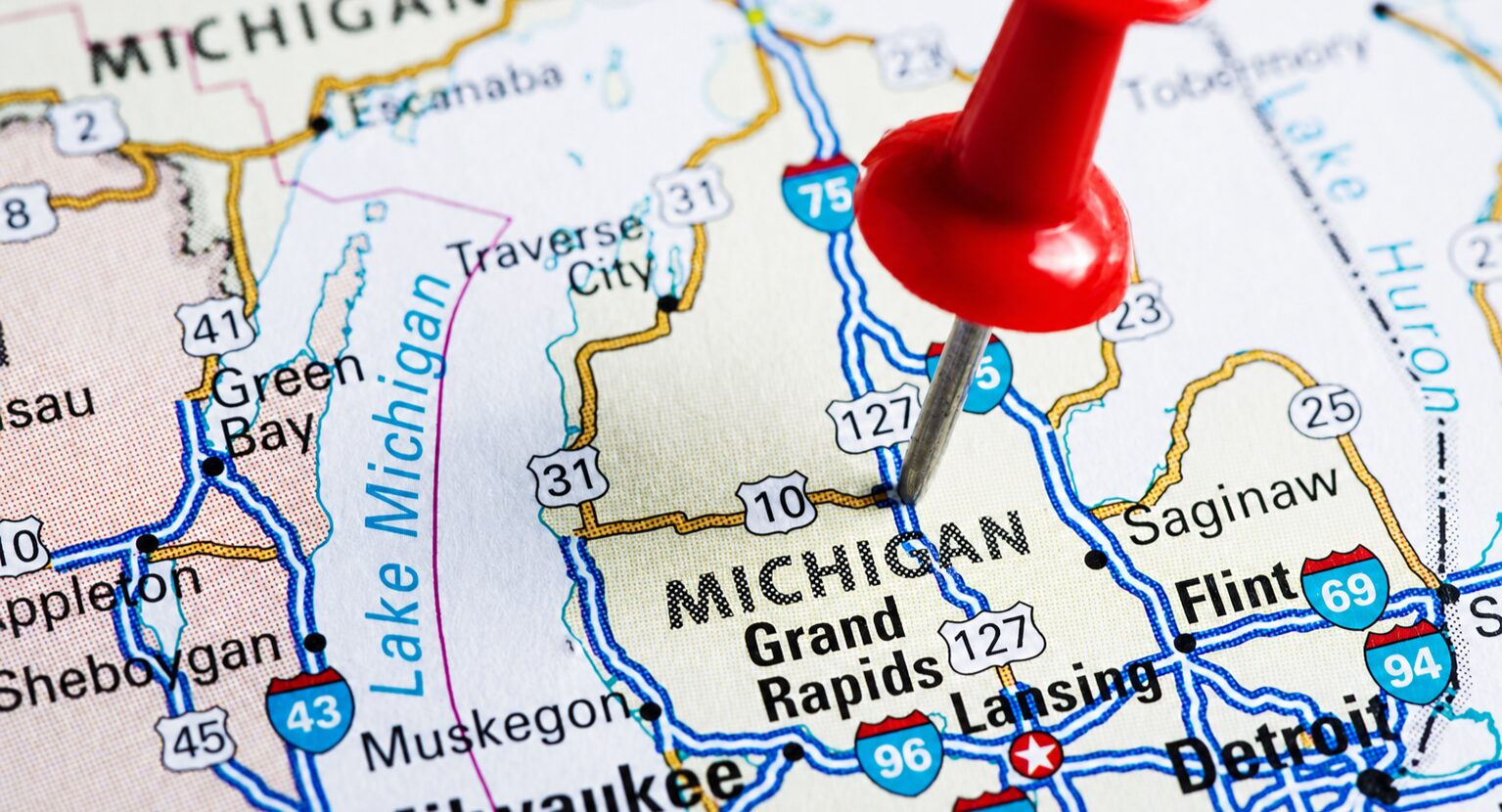
How Industries & Businesses Use Access Control Vestibules in Michigan, Illinois, Ohio, Indiana & Wisconsin
So what types of businesses need access control vestibules or heightened security?
Let’s observe by area & industry since the right configuration depends on them. Also, the type of building, industry, traffic volume, existing security systems, and local life-safety requirements make a huge difference.
Future of Access Control Vestibules
As security needs evolve, vestibules are getting smarter and more efficient. Future trends include:
- AI-Powered Facial Recognition – Faster and more accurate identity checks.
- Touchless Entry – Mobile credentials and contactless scanning for convenience.
- Smart Analytics – Tracking entry logs to identify unusual patterns or potential risks.
- Sustainable Design – Eco-friendly materials and energy-efficient systems for green buildings.
Conclusion
Access control vestibules are more than just doors—they are strategic security investments. By combining physical barriers with advanced authentication, they reduce risks, prevent intrusions, and give organizations peace of mind.
At Solucient Security, we understand that every business has unique security challenges. Our team designs and implements modern security solutions, including access control vestibules, that protect people, property, and operations. If you’re looking to strengthen your facility with a proven high-security entry system, Solucient Security has the expertise to deliver the right solution for you.
Frequently Asked Questions